
Address by Academician Zoran Knežević, SASA President, on the ceremony commemorating the anniversary of the Serbian Academy of Sciences and Arts on 19 November 2026
Every year, the Serbian Academy of Sciences and Arts celebrates 19 November as the Academy’s Day, thus marking a date when its oldest predecessor, the Society of Serbian Letters, was founded. This tradition, which began in 1841, has spanned 185 years. We should not overlook the significance of 1886, when the Serbian Royal Academy was established; since then, 140 years have passed. Just as the paths of these two predecessor institutions converged in 1892, with the unification of the Serbian Learned Society, successor to the Society of Serbian Letters, and the Serbian Royal Academy, on this occasion we are celebrating two anniversaries, paying due respect to both significant events in the Academy’s history.
It is our lasting duty, on occasions such as this, to remember with gratitude and pride the 1,500 members who are no longer with us and who, through their diligence and wisdom, dedication and perseverance, each in their own time, helped build, carry, and affirm the Academy both in our own community and on the broader European and global stage.
The Academy is an institution greater and more important and more enduring than any one of us; therefore, it is a duty of all its members, and above all of those of us who bear the greatest responsibility for it, to act accordingly and do everything in our power for it to remain as prestigious, well-organised, and functional as it was entrusted to us by our predecessors, and to pass it on in that same condition to our successors.
****
Building on what has just been said, esteemed colleagues, and bearing in mind that this is my final address to the Assembly of all SASA members during my current term as President, I would like to take this opportunity to look briefly back at what has been accomplished during this period and at what, in my opinion, has most defined the Academy’s life over the past four years.
Allow me, therefore, to recall briefly that the programme my colleagues and I presented at the beginning of our term identified guiding principles as follows: on the one hand, ‘a rational and realistically achievable continuity of the Academy’s work and activities’ and, on the other, ‘the management of its affairs in accordance with the highest standards befitting our institution’.
Of course, it is not for me to assess the extent to which we have succeeded. What I can say with good reason, however, is that we have genuinely, persistently and consistently striven to ensure the regular organisation and further development of all the activities for which the Academy is recognised in our scientific community and cultural sphere. These include numerous scientific conferences, lectures, round tables and forums, as well as major national projects, cooperation with other academies, extensive programme of high-quality publications, art exhibitions, concerts and everything else that takes place under this roof every day. Simultaneously, we have endeavoured to preserve within this honourable institution the academic spirit that it befits it – one founded on mutual respect and tolerance, understanding and acceptance of differing opinions, and the promotion of the highest scientific and artistic values and ethical principles. We have also sought to monitor and offer constructive criticism of events in Serbian society, responding to certain phenomena, negative developments, and actions of executive authorities and decision-makers. I would like to mention that 20 statements have been issued by the Academy Assembly, Executive Board, departments and SASA Boards, along with a number of statements by boards which have been published by means of their dedicated Internet websites, as well as 10 press conferences that have been held. My associates and I have not been, of course, alone in all of this, and I feel the need to express my gratitude from this podium to all of you today who wholeheartedly helped us in this endeavour, or at least simply supported us, which in turn gave us the strength to persevere in this complex and demanding work.
****
Long have these almost four years been, much has happened in society as well as within the Academy and around it, and I hope that most of it is now behind us and that, at least for the foreseeable future, we will not have to face again the turbulent events that we have all just gone through together as a society and as individuals. On the other hand, I believe that as people and citizens of this country, we can share a sense of satisfaction of knowing that through the high turnout in the recent parliamentary elections and the peaceful and dignified plebiscitary expression and respect for the political will of the citizens, the democratic potential of our people and society as a whole has been demonstrated—and quite certainly strengthened—in the most direct way. As always, in cooperation with relevant political and other actors and institutions, SASA is prepared to continue contributing in the future to the strengthening of democratic institutions, as well as to the constructive critical assessment and resolution of social and state issues for which it possesses the necessary scientific and artistic competencies and resources.
It should be noted that the Academy faced numerous challenges in the previous period, and that amid that gallimathias and cacophony of the most diverse voices, demands, whims, and criticisms, the imperative was not to compromise either the Academy’s reputation or its standing as a responsible and thoughtful voice in society, and as an intellectual pillar of society and the state– a role that is rightfully its in every respect. I think I can take the liberty of saying that perhaps not everything was entirely good, that much could have been better, yet things could also have been much worse. Let me leave it at that and not dwell further on the subject on this festive occasion.
The upcoming elections within SASA are, of course, another important subject I wish to address today – both those for full, corresponding and foreign members of the Academy, and those for the office-holders of the Academy, its Branches, the Executive Board and the Presidency. The former elections have already been initiated with the publication of a public call for nominations, and will conclude at the Election Assembly on 4 November 2027. The latter elections, which are due to take place in just a few months, will also be initiated in good time, conducted in accordance with the Law on SASA and the SASA Statute, and concluded at the Election Assembly on 30 March 2027.
Once again, we are faced with the task of conducting the elections, as on previous occasions, in the democratic tradition of the Academy, selecting the most suitable candidates and continuing to strengthen and maintain a balanced membership and structure, as we successfully did in the previous elections in 2024.
It is a sad fact that, since those elections, as many as 14 of our distinguished members have passed away. Their loss is difficult, if not impossible, to compensate for. Nevertheless, we must make every effort to ensure that this loss, which we all share, serves as an added reason to welcome new members who will sustain the Academy and make it not only larger, but also stronger and more competent in scientific and artistic terms. I believe our late colleagues would agree with this.
Allow me, esteemed colleagues, to take this opportunity to say a few words about one of the flagship institutions of our Academy, of which we are all rightfully proud – the SASA Gallery.
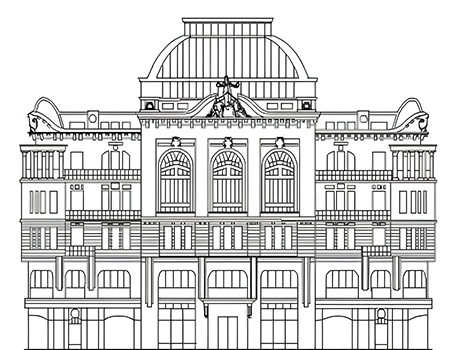
I do not wish to overlook the importance of the work of the SASA Gallery of Science and Technology or its many achievements. Nevertheless, today I would like to give particular attention to the older of our two galleries, especially in view of the exhibition of gifts received by the Academy over the past three years. Our Gallery’s curators have specially prepared this exhibition for the occasion, and it has also marked the opening of a new exhibition space on the ground floor, in the left-hand section of the building at 36 Knez Mihailova Street. I would therefore like to invite you once again to visit this lovely exhibition, if you have not already had the opportunity to do so.
I would also like to mention the decision of the SASA Presidency to award the SASA Medal to the Gallery’s long-serving Director, Academician Dušan Otašević. As is customary, the medal will be formally presented to him later in today’s programme. And please forgive me if I have breached protocol by mentioning it already, as one of the reasons for saying a few words about ‘his’ Gallery.
Founded in 1968, the Gallery of the Serbian Academy of Sciences and Arts has, for more than half a century, served as a significant meeting place of art, science, and culture. It has been a unique window onto the Academy, showcasing its activities, values and achievements. The mission of the SASA Gallery extends beyond that of a conventional exhibition space and includes the promotion of artistic creation, scientific results, science history and key segments of cultural heritage.
The high standard of the Gallery’s programme is developed through close collaboration between its curators, exhibition authors, experts from scientific and museum institutions, and leading architects and designers. An important role in shaping the Gallery’s exhibition programme is played by its Expert Council, chaired by Academician Vladimir S. Kostić, which reviews and approves proposed exhibition concepts and, where necessary, takes part in their further development. The realisation of these demanding projects is financed primarily by the Academy itself, through planned allocations from its own budget, with occasional substantial support from the Ministry of Culture of the Republic of Serbia, the Secretariat for Culture of the City of Belgrade and individual sponsors.
It would not be appropriate to turn this address into a sort of report on the Gallery’s work, but it must be said that through its uninterrupted exhibition programme, the SASA Gallery has organised approximately 300 exhibitions to date. Between 2023 and 2026, 17 exhibitions were presented, attracting nearly half a million visitors (481,284, to be exact). The exhibitions that drew the most attention are ‘Uroš Predić – the Noble Essence of Everyday Life’ (97,293), ‘Saint Sava’ (57,661) and ‘Miodrag Mića Popović: The Painting of Permanent Rebellion’(49,096). As part of its accompanying publishing activities, the Gallery has issued more than 170 catalogues in the SASA Gallery series and over 40 Exhibition Notebooks, as well as numerous other publications. Each exhibition is accompanied by a varied programme of events, including guided tours led by the exhibition authors and experts, lectures, workshops and symposia.
Over the past four years, 18 exhibitions, mostly based on works from the SASA Art Collection, have been presented at other institutions in Serbia and abroad. These exhibitions have extended the reach of the Gallery’s programme and made the Academy’s artistic heritage accessible to audiences beyond Belgrade. During the same period, the SASA Gallery’s work was recognised with five awards and honours presented to its exhibition authors, collaborators and the institution itself.
Concert activities represent an important and continuous segment of the SASA Gallery’s programme. Its tradition began in 1982, and over the course of four decades, almost 3,000 concerts (2,973 excluding guest concerts) have been held. The Academy has developed a unique programme dedicated to the affirmation of musical art, support for young performers and the presentation of the work of both Serbian and international composers and musicians. The Academy’s concert activities at the Gallery are overseen by the Secretary of the Department of Arts, Academician Ivan Jevtić. Over the past four years, approximately 240 classical music concerts have been held, featuring around 450 performers and attracting nearly 22,000 visitors.
The list of other events hosted at the Academy’s Gallery over the past four years is extensive—including theatrical performances staged within the Gallery space, award ceremonies, and exhibitions of award recipients, and participation in initiatives such as the Night of Museums. Let me, however, conclude by noting that, during the past term, the SASA Gallery has fully reaffirmed its essential role in preserving and presenting cultural heritage and connecting the Academy with our cultural community.
 Српски