Academician Dragan Škorić passes away
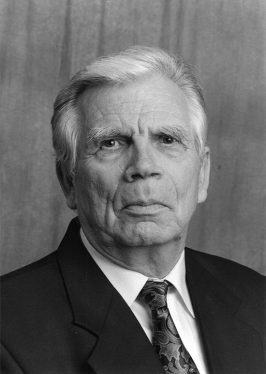
It is with great sorrow that the Serbian Academy of Sciences and Arts announces the passing of Academician Dragan Škorić, who passed away at the age of 88 on 18 November 2025 in Novi Sad. Born in Korenica on 16 September 1937, he was one of the foremost Serbian engineers in agriculture and a geneticist.
He graduated in 1963 from the Faculty of Agriculture, University of Novi Sad. Next year, he joined the Institute for Agricultural Research (now the Institute of Field and Vegetable Crops in Novi Sad) as an assistant on sunflower breeding. In the course of his work at the Institute, where he worked until his retirement in 2006, he was the leader of five projects and head of eight more subprojects. Academician Škorić was also the Head of the Oil Crops Department of the Institute in the period between 1989 and 2006. He was the President of the Institute’s Managing Board twice (from 1995 to 2003). He made a significant contribution to the professional development of staff and to the modernisation of laboratory facilities.
In 1968, he completed his postdoctoral studies at the Faculty of Agriculture, University of Novi Sad, in the Genetics and Plant Breeding group, with a Master’s thesis titled ’Testing Methods to Increase the Rate of Self-Fertilisation in S-Generation Sunflowers.’ His doctoral dissertation, titled ’Opportunities for Heterosis Exploitation Based on Male Sterility in Sunflowers, ’ he defended in 1975 at the same faculty.
He was elected a research associate in 1976. At the Faculty of Agriculture in Novi Sad, he became an assistant professor on the course Plant Breeding and Seed Production in 1978. He was named an associate professor in 1983 and a full professor in 1990. In 2008, he was honoured with the title of professor emeritus at the University of Novi Sad.
His extensive international cooperation, Professor Škorić began with a six-month specialised training in the field of oil crops genetics at the University of Giessen, in Germany, in 1968. After that, he spent several short research periods in the USA, France, Spain, Russia and Italy. As part of the project ’Improvement of Oil Crops in Iran’, from 1970 to 1978, he managed the program of sunflower genetics and breeding and spent more than two years in Iran. In addition to carrying out objectives on this project, Academician Škorić also contributed to the training of young Iranian scientists.
One of Dr Škorić’s most important international activities was within the FAO – European Research Network on Sunflower, seated in Rome. The activities were carried out from the establishment of this international body in 1975 until March 2010, when he stepped down from the position of its lead coordinator, which he had occupied from 1989. As an FAO expert, he spent time in Sudan in 1982 to explore the possibilities of sunflower breeding. Following his visit, the country started to grow sunflowers on ever-expanding areas. Additionally, he visited India twice as an FAO expert. First, together with experts from America and England, in 1989, to carry out a study on the possibilities of oil crops breeding and, second, to assess the realisation of a national scientific sunflower programme in India, which was carried out by seven scientific institutions.
Dr Škorić greatly contributed to the development of international scientific cooperation and programmes of creating joint sunflower hybrids, realised with over 30 scientific institutions and multinational companies.
He headed a project which was realised with scholars from INRA (Montpellier, France) in the period 1997-2000, which explored the use of wild sunflower species to broaden the genetic variability of cultivated sunflower.
He held three-week courses on genetics, breeding and seed production of sunflowers to groups of Chinese experts. Furthermore, he visited China 16 times, working on advancing scientific cooperation. This resulted in the establishment of the Chinese-Serbian Centre for Sunflower Breeding (Baicheng City, Jilin Province) in 2003.
He was elected a corresponding member of the Serbian Academy of Sciences and Arts in 2003 and its full member in 2009. Within his work in the Academy, he served as the president of the Academy Board for Rural Issues and a member of the Academy Board on Environment. Furthermore, in the period between 2004 and 2011, he presided over the Board for the Flora and Vegetation. From 2014, he led the project ‘Sunflower Breeding for Resistance to Broomrape (Orobanche cumana Wallr)’.
He was a full member of the Academy of Engineering Sciences of Serbia (from 2000) and the Serbian Genetic Society. He was also a foreign member of the National Academy of Agricultural Sciences (from 2000) and the Academy of Sciences and Arts of the Republika Srpska (from 2015).
His work included participation in numerous significant national projects. He was a member of the Board for Biology and Biotechnology of the Ministry of Science and Technology of the Republic of Serbia from 1998 to 2000 and was appointed to the Republic Council for Scientific and Technological Policy (later the National Council for Science and Technological Development) for three terms, until March 2010. In the period from 2003 to 2006, he served as the director of the national program ’Biotechnology and Agroindustry’, which brought together more than 900 scientists and experts who participated in the implementation of 65 projects. The programme resulted in the development of technology for over 60 products.
His editorial work is also notable. He was a member of the editorial boards of the journals Uljarstvo, Genetika and Arhivi za poljoprivredne nauke, as well as a member of the editorial boards of the Romanian journal Annals, Macedonian Journal of Plant and Environmental Protection and Ukrainian Breeding and Seed Production. From 1989, he served as the editor-in-chief of the international journal on sunflowers HELIA.
He received multiple national and international awards and recognitions for his work, including Labour Day Order of SFRY (1980); Certificate of Appreciation (USA), Recognition for Successful Realisation of Joint Projects with the USA (1987), Order of Merit to the People (FRY) Kivalo Munkaert recognition of the Hungarian Ministry for Agriculture (1981); Pustavoit Award presented by ISA for science development contribution (1988); October Prize of the City of Novi Sad (1995); Hi Bred International Diploma presented by the USA for advancement of sunflowere genetics on the international level (2000) and the Friendship Award of the Government of PR China (2006)
Through his expert, educational, and scientific work, he left an indelible mark on the development of the national agriculture.
His passing represents a great loss for the Serbian Academy of Sciences and Arts, as well as for the entire Serbian society.