The Year of Academician Aleksandar Belić
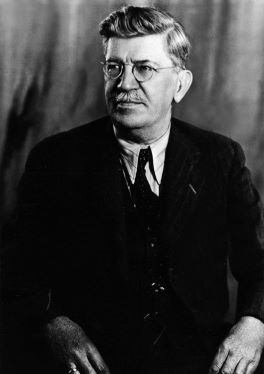
In 2026, the Serbian Academy of Sciences and Arts is marking the Year of Academician Aleksandar Belić (b. Belgrade, 2 August 1876 – d. Belgrade, 26 February 1960), the most prominent Serbian and one of the leading Slavicist worldwide of the first half of the 20th century, as well as the president of the Serbian Royal Academy and Serbian Academy of Sciences.
He completed his primary education and attended the First Male Grammar School in Belgrade, after which he enrolled in Slavic studies at the Department of Philology and History of the Belgrade Higher School. Following the completion of the first year, he continued his studies at the University of Odessa, and at the University of Moscow, where he graduated with honours in 1899.
Tte next year, under the mentorship of renowned professors Karl Brugmann and August Leskien, he defended his doctoral dissertation titled On Historical Development of Slavonic Deminutive and Amplificative Suffixes (Zur Entwicklungsgeschichte der slavischen Deminutiv und Amplifikativsuffixe) at the Leipzig University. Per Professor Leskien’s suggestion, his dissertation was printed in German in the Archiv für slavische Philologie in two parts, in 1901 and 1904.
After returning to Belgrade, Belić was elected assistant professor at the Belgrade Higher School for the 1900/1901 academic year. The following year, he was promoted to associate professor, and in 1904 he was elected full professor.
Upon the establishment of the University of Belgrade in 1905, he continued his academic career at the Faculty of Philosophy. In 1906, he was appointed associate professor of Slavic philology, the Serbian language and general linguistics.
The beginning of his academic and scholarly career was dedicated to dialectological studies, which culminated in his seminal work titled ’Dialects of Eastern and Southern Serbia’, published in 1905. This eminent study was published in the first issue of the journal Srpski dijalektološki zbornik, which Aleksandar Belić founded at the Serbian Royal Academy. He is credited with launching linguistic periodicals in Serbia. Jointly with Ljubomir Stojanović, he established the journal Južnoslovenski filolog in 1913, and the journal Naš jezik in 1932. He was editor-in-chief of all three publications, which run to this day published by the Academy and the Institute for the Serbian Language of SASA.
Following the end of the First World War, in 1919, he was appointed full professor at the Faculty of Philosophy in Belgrade. In the academic 1933/34 year, he served as the rector of the University of Belgrade. e formally retired from his position as full professor in 1954; however, he continued to teach at the Faculty as an honorary full professor. Through his extensive pedagogical work, he educated generations of distinguished philologists, linguists and Slavicists.
In 1905, he was elected a corresponding member of the Serbian Royal Academy, and already the following year became its full member. From 1923 to 1937, he served as Secretary General of the Serbian Royal Academy, after which he was elected President of the Academy. During the German occupation of Serbia in the Second World War, he was arrested by the Gestapo on 4 November 1941 and spent several months in the Banjica concentration camp. After the end of the Second World War, he resumed the position of President of the Academy, which he held until his death in 1960. It should be noted that Belić, as the then secretary of the Serbian Royal Academy, compiled and delivered a comprehensive Report at the ceremony marking the Academy’s 50th anniversary, held on 24 January 1937. The Report consisted of a Preface, Introduction and specially titled parts: I The Society of Serbian Letters, II The Serbian Learned Society, III The Serbian Royal Academy. In writing a precise history of the Serbian Academy of Sciences and Arts, this report will be of particular importance, as will his extensive works on the Serbian Royal Academy, which were printed as special editions in 1936.
From the establishment of the Institute for the Serbian Language of SASA in 1947, he was its director. He played a central role in building a qualified lexicographic team and in preparing the publication of the Dictionary of the Serbo-Croatian Literary and Folk Language. Belić spearheaded the compilation of the first volume of the Dictionary, which was published in 1959. He was a proponent of a unified Serbo-Croatian language and one of the signatories of the Novi Sad Agreement (1954).
As a long-serving President of the Serbian Royal Academy, Aleksandar Belić played a pivotal role in the advancement of Serbian science, the institutional strengthening of the Academy, and the international affirmation of Serbian and Yugoslav philology.
His impressive scientific body of work comprises over 900 bibliographic items, including scientific papers published in German, Russian and French. He explicated his general linguistic teachings most thoroughly in the two-volume monograph O jezičkoj prirodi i jezičkom razvitku. Lingvistička ispitivanja [On the Nature of Language and Language Development. Linguistic Studies]. I and II (vol. I 1941, second edition 1958 and vol. II 1959), which is considered his life’s work. Among his extensive scholarly work, the following works are particularly noteworthy: Akcenatske studije [Accent Studies I] (1914), Dijalektološka karta srpskog jezika [Dialectological Map of the Serbian Language] (1905), O dvojini u slovenskim jezicima [On Dual in Slavic Languages] (1932), Vuk i Daničić [Vuk and Daničić] (1947), Vukova borba [Vuk’s Fight] (1948. He was the author of several university textbooks and secondary school grammars, as well as orthographic guides, including Pravopis književnog srpskohrvatskog jezika [Spelling of the Literary Serbo-Croatian Language] (1923) and Pravopis srpskohrvatskog jezika [Spelling of the Serbo-Croatian Language] (1950, 1952).
He was a member of numerous foreign academies and scientific societies. In 1947, he was elected an honorary professor at Lomonosov Moscow State University. He was awarded honoris causa doctorates by the University of Glasgow in 1951 and the Charles University in Prague in 1946. He received various decorations for his scholarly work, including: the Order of Saint Sava, First Class (1930), the Royal Order of the Star of Karađorđe, Third Class (1932), the National Order of the Legion of Honour (Ordre national de la Légion d’honneur, 1933), the Royal Order of the Yugoslav Crown, First Class (1937), the Order of Labour, First Class (1949), and the Order of Merit to the People, First Class (1955), among others.
Through his work, he made a profound impact on the development of Serbian and Slavic linguistics, particularly in the fields of dialectology, accentology, phonetics, morphology and language history. He is considered one of the founding fathers of Slavic syntax. His body of lectures represents one of the cornerstones of the study of the contemporary Serbian language grammar and comparative Slavic studies.
As a versatile researcher, outstanding scholar and pedagogue, Aleksandar Belić left an indelible mark on the history of linguistics in the Yugoslav region.